

The importance of having a digital marketing plan
o that your brand reaches more people, wins more customers and makes better use of the traffic it receives.
Boost your business with a digital marketing strategy
Having an online presence is no longer enough. To win customers, increase a brand's visibility and turn visits into business opportunities, you need a well-defined digital marketing strategy.
A digital marketing plan lets you set out what you want to achieve, who you want to target, which channels you will use and how you will measure results. Instead of carrying out isolated actions with no clear direction, you will have a strategy that helps you make better use of your resources and make data-driven decisions.
In an increasingly competitive digital environment, having a plan is not a luxury: it is a fundamental tool for any company that wants to grow and consolidate its online presence.
Define your goals, connect with your customers and turn your digital presence into results.
What is a digital marketing plan?
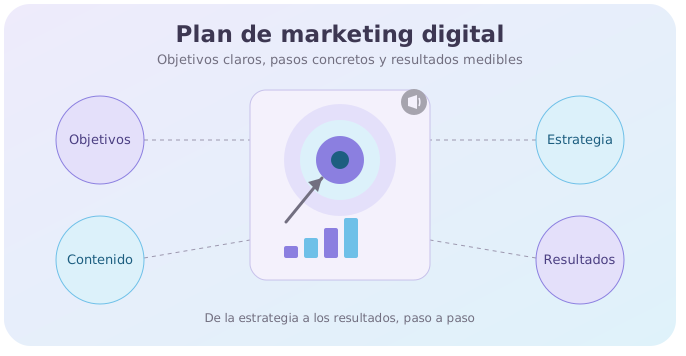
A digital marketing plan is a roadmap that organises a company's online marketing activities. Its purpose is to establish a coherent strategy to achieve specific business goals using digital channels.
A good plan starts by understanding the company's current situation, its market, its competitors and its target audience. Based on that analysis, the goals are defined and the most suitable strategies and channels are selected.
Depending on each business's needs, a strategy may include SEO, content marketing, online advertising, social media, email marketing, web analytics or customer acquisition campaigns.
The key is not to use every possible channel, but to know which ones can add the most value and how they should work together.
Why is it important to have a digital marketing strategy?
Without a defined strategy, it is easy to invest time and money in actions that do not deliver the expected results. Posting on social media, creating content or investing in advertising without clear goals can become an expense that is hard to justify.
An online marketing plan lets you work with a global vision and set priorities.
Define clear goals
The first step to getting results is knowing what you want to achieve. Increasing sales, generating new leads, improving brand awareness, driving website traffic or building customer loyalty are different goals and call for different strategies.
Defining specific goals makes it possible to set indicators to check whether your actions are working.
Get to know your target audience better
An effective digital strategy must start from knowing the customer. Who are they? What do they need? How do they look for information? What problems do they want to solve? Which channels do they use?
Answering these questions lets you create more relevant messages and content, and design campaigns aimed at the people who may genuinely be interested in your products or services.
Optimise your investment
One of the great benefits of digital marketing is the ability to measure the results of your actions. This lets you know which campaigns work, which channels generate the most opportunities and where it is worth investing.
With a digital marketing plan for businesses, you can allocate your resources far more efficiently and cut spending on actions that deliver no results.
Increase your online visibility
Your potential customers use the internet to look for information, compare alternatives and make purchasing decisions. If your company does not appear when they run those searches, you are missing out on opportunities.
An SEO positioning strategy, combined where necessary with digital advertising and quality content, can help you improve your visibility and attract qualified traffic to your website.
The main elements of a digital marketing plan
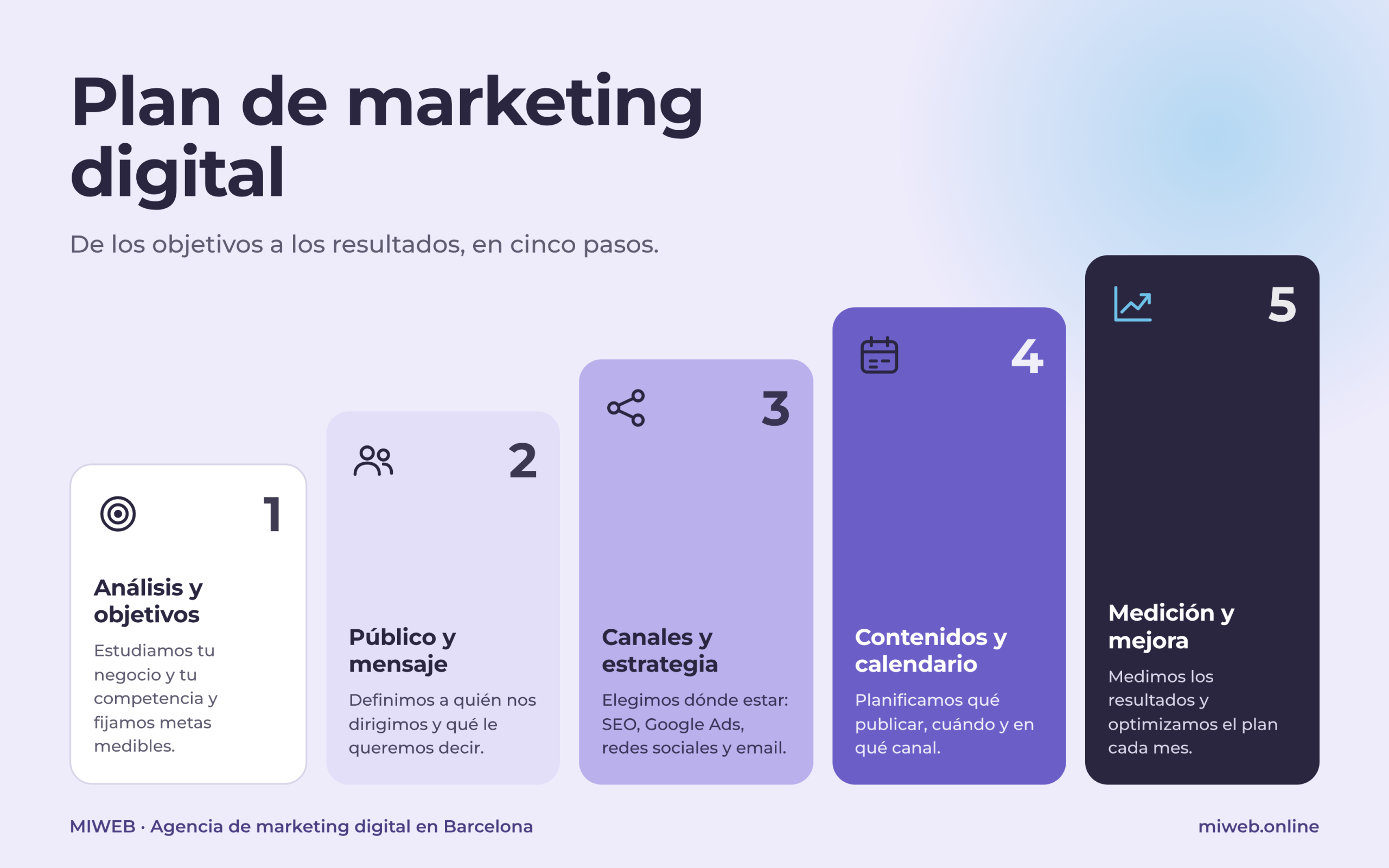
Every company needs a strategy tailored to its goals and characteristics. However, there are some fundamental elements that should form part of any plan.
Situation analysis
Before deciding what to do, you need to know where the company currently stands. This means analysing the website, search engine rankings, social media presence, past campaigns and other relevant factors.
It is also important to study the competition and spot opportunities in the market.
Defining the target audience
Not everyone is a potential customer. Defining the target audience lets you direct resources towards the people who are most likely to need and buy your products or services.
In some projects it can also be useful to create different customer profiles or buyer personas to better understand their needs and behaviour.
Goals and KPIs
Goals must be specific and, whenever possible, measurable. To track their progress, digital marketing indicators or KPIs are used, such as organic traffic, conversions, leads, cost per acquisition, conversion rate or return on investment.
Measuring is essential to know what is working and what needs improving.
Content strategy
Content is a key element for attracting users and guiding them through the buying process.
A corporate blog, service pages, guides, videos, case studies or social media content can help answer potential customers' questions and strengthen a brand's authority.
In addition, an SEO-oriented content strategy lets you work on keywords related to the products and services the company offers.
SEO and web positioning
SEO (Search Engine Optimization) aims to improve the visibility of a website in organic search engine results.
An SEO strategy can include keyword research, content optimisation, technical SEO, improving the site architecture, internal linking and building authority.
SEO takes time and consistency, but it can become a sustainable source of qualified traffic in the medium and long term.
Digital advertising
Online advertising lets you reach specific audiences quickly and in a targeted way. Platforms such as search engines and social media offer different formats to generate traffic, leads, sales or awareness.
SEM and digital advertisingl campaigns should be integrated into the overall strategy and analysed according to their results.
Social media
Social media can help increase a brand's visibility, build a community and maintain a close relationship with customers.
However, being present on every platform is not always necessary. What matters is identifying where the target audience is and creating suitable content for each channel.
Analytics and measurement
A digital marketing plan does not end when the campaigns are launched. The data obtained must be analysed continuously.
Digital analytics lets you discover which pages receive the most visits, where the traffic comes from, which actions generate conversions and where visitors drop off.
This data makes it possible to make decisions and gradually optimise the strategy.
Digital marketing with a strategy tailored to your business
There are no universal formulas. A small local business does not have the same needs as an ecommerce store, a B2B service company or a company operating in several countries.
That is why a personalised digital marketing plan must take into account each business's goals, resources, sector, competition and audience.
The strategy must answer one fundamental question: which digital actions can have the greatest impact on your company?
From there it is possible to set priorities, define a calendar of actions and allocate the available resources more efficiently.
Turn your online presence into business opportunities
A website can be much more than a shop window. With the right strategy, it can become a tool for attracting visitors, generating leads and winning new customers.
The aim of an online marketing plan is not simply to get more visits. What matters is attracting the right people and guiding them through to conversion.
That is why all the elements must work in coordination: the website, SEO, content, advertising, social media and analytics.
Why trust digital marketing professionals?
The digital environment is constantly changing. Consumer habits evolve, search engines update their systems and advertising platforms introduce new features.
Working with specialist professionals makes it possible to analyse each business's opportunities, set priorities and develop a results-oriented digital marketing strategy.
In addition, outsourcing certain tasks lets companies focus on their core activity while specialists take care of planning, executing and optimising digital actions.
Take the next step
If you want to improve your company's online presence, increase your visibility and win more business opportunities, the first step is to have a strategy.
A digital marketing plan lets you move from improvisation to a methodology based on goals, data and results.
It is not about being online for the sake of it. It is about using the right digital channels to reach your customers, communicate the value of your brand and grow your business.
Ready to turn your digital presence into results?
Contact us and let's design a digital marketing plan tailored to your company's goals and needs.